Executive Summary
- Medical equipment manufacturers need precision-machined components for surgical robotics, diagnostic systems, and support devices used in applications with no patient contact or implantation.
- ISO 9001 certification maintains aerospace-grade quality standards for non-critical medical components and eliminates the need for ISO 13485 registration.
- Ultra Precision provides precision medical machining services in Florida for non-implantable equipment components.
Medical-Adjacent Manufacturing Capabilities
Medical device manufacturers need tight-tolerance components for surgical robotics and diagnostic equipment. Components must meet exacting specifications while avoiding the regulatory overhead of implantable devices. Medical machining projects require a shop that understands tight-tolerance work, challenging materials, and complex part designs.
At Ultra Precision, we machine non-implantable medical components to ultra-high standards for Florida’s equipment manufacturers. Our CMM-verified processes support surgical robotics, diagnostic systems, and support devices across metals, composites, and engineering plastics.
Read on to learn more about Ultra Precision’s capabilities for medical-adjacent manufacturing and how we support prototype-to-production workflows.
Get a Quote for Medical Machining Services in Florida
Precision Machining for Non-Implantable Medical Equipment
Non-implantable medical equipment relies on machined components that hold tight tolerances. Heat, tool pressure, and workholding instability can distort even common alloys. We control these variables through the process discipline we have developed over decades of work on aerospace projects.
Strict Requirements for Robotic and Diagnostic Hardware
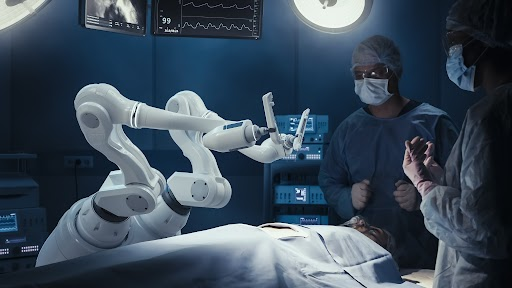
- Surgical robots require absolute precision for safe operation. Machinists achieve this standard by milling gear mechanisms and structural arms to tight tolerances.
- Complete material traceability is mandatory for medical production runs. Quality control teams track every alloy batch from the initial cut through final inspection.
- Proper sterilization requires external housings with perfectly smooth surface finishes. Shop technicians eliminate microscopic crevices using specialized machining techniques.
- Equipment manufacturers often need to ramp up production for large hospital rollouts. CNC facilities support these shifts by delivering consistent parts across both small and high-volume orders.
Ensuring Reliability in Clinical Settings
High-quality components prevent equipment failure during critical procedures. These precision-machined components must work to exacting specifications to ensure proper operation, every time.
Medical Machining Services in Florida
Non-implantable medical equipment relies on machined components that hold tight tolerances. Heat, tool pressure, and workholding instability can distort even common alloys. We control these variables with the process discipline we developed on aerospace projects. That experience keeps every feature true to the print.
Our Capabilities for Medical-Adjacent Manufacturing
We provide our customers with the following capabilities for non-implantable medical device components:
- Three decades of experience: Ultra Precision has operated as a family-owned business for over 30 years and built deep expertise in tight-tolerance work.
- Strategic Space Coast location: Palm Bay provides fast shipping to Florida’s medical device manufacturers and direct access to Port Canaveral for international logistics.
- CMM inspection capabilities: We verify dimensional accuracy to within 0.0001 inches using coordinate measuring machines.
- Prototype-to-production workflow: Our facility transitions early-stage R&D parts into high-volume contract manufacturing without re-engineering the process.
- Rigorous quality management: Our ISO 9001 certification governs our operations and delivers aerospace-grade precision for medical-adjacent projects without requiring ISO13485 registration.
- Diverse material expertise: We machine aluminum alloys, stainless steel, titanium, and engineering plastics.
High-Precision Manufacturing for Medical Equipment
Ultra Precision has extensive experience with alloys and challenging-to-machine metals on aerospace projects. We also understand the required processes and have the necessary equipment required to achieve tight tolerances and machine intricate part designs. This enables us to take on highly complex medical part machining jobs without requiring ISO 13485 certification.
Common CNC Applications for Medical-Adjacent Projects
Medical equipment manufacturers require precision components for diagnostic systems and surgical support hardware. Machine shops produce these non-critical parts to exact specifications, with no patient-contact requirements.
Primary Categories of Non-Critical Components
Medical equipment production relies on four main types of components. Each category serves distinct functions in healthcare operations and diagnostic systems.
Equipment Housings & Structural Components: Non-patient-contact parts protect sensitive electronics inside diagnostic machines. Machinists produce MRI panels, mounting hardware, and internal brackets for imaging systems. Aluminum 6061 and 7075, stainless steel 304 and 316, ABS, and polycarbonate serve as common materials for these applications.
Basic Class I & External-Use Devices: Low-risk components serve external functions and never enter the body. Manual instruments and mobility-aid hardware, such as wheelchair frames, fall into this category. Stainless steel, aluminum, polypropylene, and polyethylene provide the necessary durability for these items.
Prototyping & R&D Components: Product designers validate concepts and plan surgical procedures using early-stage parts. Development teams rely on anatomical fixtures and test rigs during initial testing phases. Machinable plastics like acetal, aluminum, and resin-based materials work well for prototype builds.
Manufacturing Support & Tooling: Custom tooling supports the mass production of pharmaceutical products. Assembly lines depend on machined jigs, fixtures, and automation brackets to operate efficiently. Tool steel, stainless steel, aluminum, and UHMW provide the strength and wear resistance these support items require.
Material Selection for Non-Implantable Medical Components
Medical machining projects often call for metals that hold tight tolerances across detailed part designs. Ultra Precision applies alloy-machining experience from complex aerospace work to non-implantable components that need stable dimensions and clean finishes.
Common Metals and Alloys
Aluminum alloys are well-suited for brackets, housings, mounting hardware, and structural components that require strength without added weight. Grades such as 6061 and 7075 can also hold detailed features and consistent dimensions.
Stainless steel is well-suited for medical-adjacent parts that require corrosion resistance, strength, and a clean surface finish. Grades such as 304 and 316 are common choices for external hardware, equipment frames, fixtures, and production components.
Tool steel provides hardness and wear resistance for manufacturing fixtures, cutting guides, and production tooling. Shops need proper equipment, cutting strategy, and workholding to maintain accurate results across detailed part features.
Challenging Alloys for Complex Designs
Ultra Precision excels with metals that require careful planning, stable setups, and tight process control. These parts may include thin walls, deep pockets, close-tolerance features, and geometry that leaves little margin for error.
Difficult alloys need controlled feeds, sharp tooling, and stable fixturing to limit heat, movement, and distortion. Ultra’s aerospace project experience gives the team practical knowledge of material behavior under tight-tolerance requirements.
That experience applies well to non-implantable medical equipment components that require precise metal features, clean surfaces, and repeatable dimensions. These projects may include diagnostic equipment components, robotic assemblies, machined frames, and production tooling.
Precision Titanium Parts for Surgical Robotics
Titanium delivers exceptional strength-to-weight ratios for surgical robotic systems and support equipment. This metal withstands continuous mechanical stress in demanding clinical environments.
End Effectors and Precision Gearing
Surgical robots require precision components machined to .0001-inch tolerances for accurate positioning during procedures. Titanium gears mesh flawlessly and transmit torque without backlash in robotic arm assemblies. End effectors for minimally invasive surgery demand tight tolerances and lightweight construction.
Machinists cut titanium components for these instruments using carbide tooling and controlled feed rates to maintain dimensional accuracy. Navigated instruments for patient-specific applications rely on titanium’s biocompatibility and structural stability.
Structural Components for Robotic Arms
Robotic arm assemblies require rigid supports capable of handling continuous mechanical stress. Titanium provides the necessary tensile strength for these structural members without adding excessive weight. CNC operators machine mounting brackets, pivot housings, and actuator frames from titanium bar stock. These components maintain their dimensional stability through thousands of movement cycles in fast-paced surgical settings.
Partner With Ultra Precision for CNC Medical Machining
Medical equipment manufacturing requires precision components that meet aerospace standards without being subject to implantable device regulations. Non-critical parts for surgical robotics, diagnostic systems, and support equipment need tight tolerances and material versatility.
Ultra Precision brings three decades of precision machining experience to Florida’s medical equipment sector. Our team supports prototype-to-production workflows for non-implantable components. Click below to learn more about our capabilities and submit an RFQ.