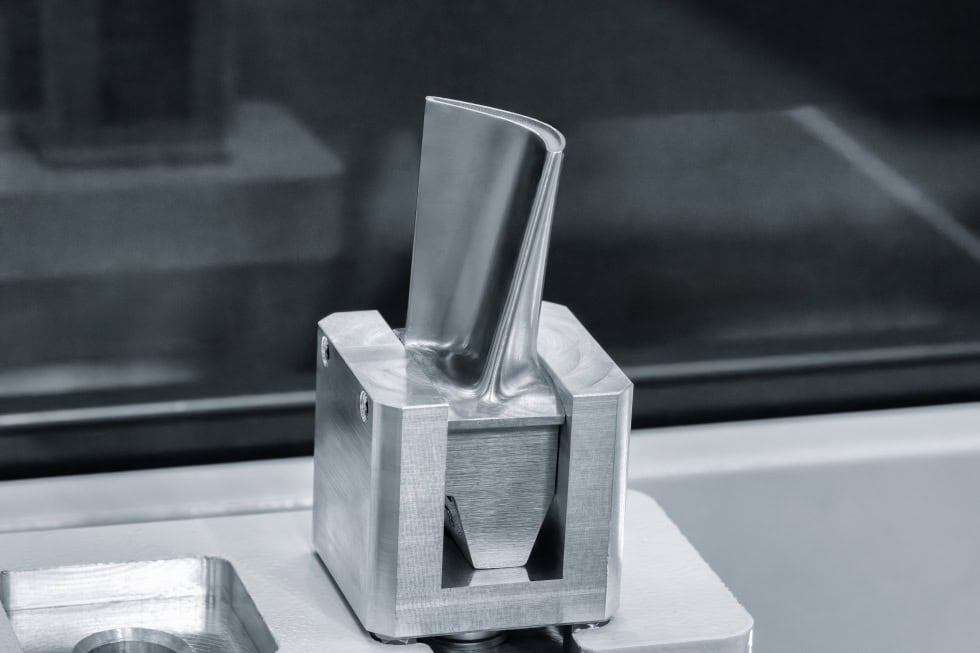
Aerospace and defense companies seeking Inconel machining services encounter multiple challenges when working with these superalloys and similar hard-to-cut materials. These materials resist conventional machining methods and require equipment, expertise, and techniques that most shops lack. These companies often struggle to find machine shops capable of handling these demanding alloys while maintaining tight tolerances.
At Ultra Precision, we machine Inconel and other hard-to-cut superalloys using advanced 5-axis CNC equipment and proven cutting strategies that control heat buildup and prevent work hardening. Our AS9100-certified facility produces aerospace components from these demanding materials, meeting the stringent quality requirements that defense and aviation applications demand.
Read on to learn more about our approach to machining these challenging materials and how we deliver precision aerospace and defense parts.
What is Inconel 718 and Other Hard-to-Machine Metals?
Inconel 718 belongs to a family of nickel-chromium superalloys engineered to maintain strength and resist corrosion at extreme temperatures. Jet engines, gas turbines, and rocket components require these materials to function reliably under harsh conditions. These superalloys belong to a broader category of hard-to-machine metals that includes titanium alloys, Invar, and precipitation-hardening stainless steels like Custom 455.
The shared characteristics that make these alloys valuable also create machining difficulties across the entire material family. Each metal type hardens when cut, retains heat during processing, and wears down tooling at accelerated rates compared to standard materials. Understanding these common traits helps explain why machining these alloys requires different approaches than traditional steel or aluminum work.
Why are these materials harder to machine?
Hard-to-machine alloy metals create unique problems that conventional materials do not. Their atomic structure and metallurgical properties force machinists to abandon standard cutting parameters and adopt entirely different strategies. Machine shops without proper equipment and expertise often damage both the workpiece and their tooling when attempting to cut these materials.
They’re difficult to machine due to several reasons, including:
Work Hardening: These materials become harder during the cutting process itself, turning what starts as a manageable cut into an increasingly difficult operation that can seize cutting tools and ruin parts.
Heat Generation: Poor thermal conductivity traps heat at the cutting zone rather than dissipating it through the workpiece, creating temperatures that destroy carbide inserts and alter material properties.
Chemical Reactivity: Many superalloys react chemically with cutting tool materials at elevated temperatures, causing rapid tool degradation through diffusion wear and crater formation on tool faces.
Abrasive Properties: Hard carbide particles and other inclusions within these alloys act like sandpaper against cutting edges, wearing down tools through mechanical abrasion even at moderate cutting speeds.
Machine Shop for Aerospace and Defense Specialty Metals
At Ultra Precision, we’re a high-temp metals machining facility that specializes in Inconel and the complete range of challenging materials that aerospace manufacturers require. Our state-of-the-art 5-axis CNC equipment and advanced machining centers handle complex geometries while maintaining the tight tolerances that critical flight components demand. We process these demanding materials using cutting strategies developed through years of working with defense contractors and aerospace OEMs.
Aerospace applications expose components to extreme temperatures, corrosive environments, and mechanical stresses that destroy conventional materials. Our machinists understand how titanium, Inconel, Invar, and precipitation-hardening steels behave under different cutting conditions and adjust parameters accordingly. We combine this material knowledge with optimized toolpaths and automated processes to machine parts efficiently while controlling costs.
We work with a wide range of specialty defense and aerospace metals, including:
Custom 455 Steel: This precipitation-hardening stainless steel delivers corrosion resistance and high strength after heat treatment. The material’s hardness variations and work-hardening tendencies demand precise speed and feed control during machining operations.
Invar: This iron-nickel alloy exhibits an extremely low coefficient of thermal expansion. The material proves valuable for precision instruments and optical equipment. Work-hardening characteristics and abrasive properties cause significant tool wear during cutting processes.
Titanium: These alloys provide excellent strength-to-weight ratios but transfer heat poorly and react chemically with cutting tools at elevated temperatures. The material springs back after machining, which impacts dimensional accuracy and surface finish quality.
Inconel 718: This nickel-based superalloy work-hardens rapidly during cutting and generates excessive heat that damages tooling. High-temperature strength makes the material essential for turbine components and exhaust systems.
Comparing Properties of Hard-to-Machine Materials
| Property | Custom 455 Steel | Invar (36% Ni) | Titanium (Alloys) | Inconel 718 |
| Primary Feature | High strength & good corrosion resistance | Extremely low coefficient of thermal expansion | High strength-to-weight ratio | High strength at elevated temperatures |
| Tensile Strength (Ultimate) | ~1413 MPa | ~400–500 MPa | 600 – 1250+ MPa | ~1375 MPa |
| Yield Strength | ~1145 MPa | ~230–350 MPa | 240 – 1100 MPa | ~1100 MPa |
| Hardness (Rockwell) | ~49 HRC | 60–85 HRB | 32–38 HRC (Alloys) | 34–40 HRC |
| Density | ~7.76 g/cm³ | ~8.05 g/cm³ | ~4.42 g/cm³ (Ti-6Al-4V) | 8.19 g/cm³ |
| Coefficient of Thermal Expansion (at 20°C) | ~10.8 µm/m·°C | ~1.2 µm/m·°C | ~8.6 µm/m·°C | ~12.8 µm/m·°C |
AS9100-Certified Aerospace Machining
Ultra Precision holds AS9100 certification for aerospace component manufacturing. This requires strict procedures and detailed documentation throughout the entire production process from initial design review through final inspection. We track material certifications, cutting tool changes, dimensional measurements, and process parameters for every part that leaves our facility.
AS9100 standards require full traceability of all materials and processes used in aerospace components. Every piece of raw material must have verified chemical composition reports and heat treatment records. This documentation follows each part through machining and provides the paper trail that aerospace quality audits demand.
Industry-Leading Precision Inconel Machining Services
Machining Inconel and other superalloys requires equipment, expertise, and procedures that most shops cannot provide effectively. Success depends on understanding how these materials behave during cutting and implementing the right strategies to control heat, prevent work hardening, and maintain tool life.
At Ultra Precision, our combination of advanced 5-axis equipment and AS9100-certified processes delivers the precision aerospace components that demanding applications require. We handle the technical challenges of superalloy machining while maintaining the quality standards and documentation that aerospace manufacturers demand.
Click below to get a quote and contact us to discuss your next challenging machining project.